
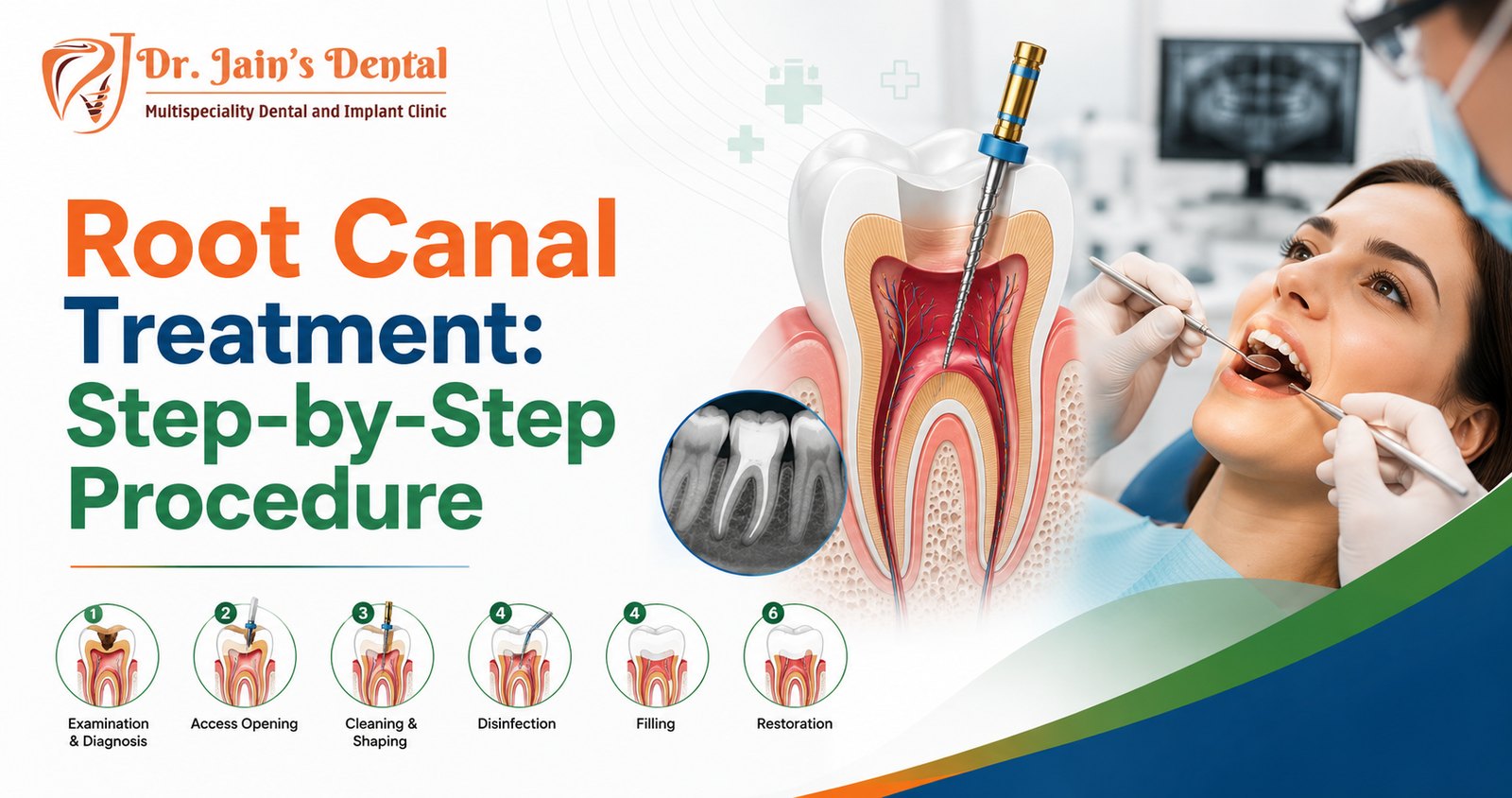
A tooth starts hurting. Not a tiny twinge that disappears after a glass of water, but the kind of pain that keeps returning when you bite, drink something hot, or try to sleep. Then comes the inevitable thought: Is this going to need a root canal?
Probably the most misunderstood dental treatment.
A root canal isn't someone drilling a tunnel through your tooth for the fun of it. The aim is much simpler — remove infected or damaged tissue from inside the tooth, clean the area thoroughly, seal it, and preserve the natural tooth for as long as possible. At Dr Jain's Dental & Implant Clinic, the procedure is planned around the condition of the tooth rather than treating every case with the same checklist.
So, what actually happens?
Let's walk through it.
Step 1: Examination and Diagnosis
Before anything is done, the dentist needs to understand what is happening beneath the surface.
Your symptoms matter. So does the examination.
A tooth that hurts when you drink cold water isn't necessarily a root canal case, just as a tooth that has stopped hurting isn't necessarily healthy. In some cases, the nerve inside the tooth may have become severely damaged, causing the pain to disappear altogether — which sounds like good news until you realise the infection may still be progressing.
The dentist may examine the tooth for sensitivity, tenderness, cracks, swelling and other signs of infection. Dental X-rays or appropriate imaging can then help reveal the condition of the roots and surrounding bone.
This is where diagnosis saves guesswork.
Step 2: Local Anaesthesia
Nobody wants to sit in a dental chair imagining the worst.
Thankfully, modern root canal treatment is performed with local anaesthesia to numb the affected area. The dentist carefully administers the anaesthetic so that the tooth and surrounding tissues become sufficiently numb before treatment begins.
You may still feel pressure or movement. That's normal. Sharp pain, however, shouldn't simply be tolerated — tell your dentist.
Good communication during treatment matters more than people realise.
Step 3: Isolating the Tooth
Once the tooth is numb, it is isolated from the rest of the mouth.
A dental dam may be used to keep the treatment area clean and dry. This small step might look unremarkable, but it serves an important purpose: saliva and bacteria shouldn't be allowed to interfere with a procedure that involves cleaning the inside of an already compromised tooth.
Think of it as creating a controlled workspace.
The mouth is full of bacteria. The root canal system doesn't need an invitation.
Step 4: Creating Access to the Root Canals
Now comes the part most people picture when they hear "root canal" — opening the tooth.
The dentist makes a carefully planned opening through the top of the tooth to reach the pulp chamber and root canals underneath. The opening isn't random or unnecessarily large; it is created to provide access while preserving as much healthy tooth structure as possible.
Inside the tooth are tiny spaces containing nerves, blood vessels and connective tissue. When this pulp becomes infected or irreversibly inflamed, simply treating the outside of the tooth won't solve the problem.
The source has to be reached.
Step 5: Cleaning and Shaping the Canals
This is the heart of the procedure.
The infected or damaged pulp tissue is removed, and the root canals are carefully cleaned and shaped using specialised dental instruments. The dentist also works to eliminate bacteria and debris from these narrow spaces.
Some canals are surprisingly fine and curved. They aren't neat little pipes waiting to be scrubbed out, which is why root canal treatment requires precision, patience and a proper understanding of root anatomy.
At Dr Jain's Dental & Implant Clinic, advanced dental techniques and imaging can support accurate treatment planning, particularly when root anatomy is complex.
Slow and precise beats rushed every time.
Step 6: Filling and Sealing the Canals
Once the canals have been cleaned and shaped, they need to be sealed.
A specialised biocompatible material is used to fill the cleaned canal space and help prevent bacteria from getting back inside. The dentist then seals the access opening with a suitable restoration.
Why all this sealing?
Because cleaning an infected canal only to leave an open pathway for bacteria would defeat the entire purpose of the treatment.
Step 7: Restoring the Tooth
Root canal treatment deals with the infection, but the tooth still needs protection.
Depending on how much natural tooth structure remains and which tooth has been treated, the dentist may recommend a filling or dental crown. Back teeth, in particular, can take considerable chewing pressure, so a crown may be recommended to strengthen and protect a weakened tooth.
This final restoration isn't merely cosmetic. It helps the treated tooth function properly and reduces the risk of further damage.
What Happens After a Root Canal?
Some tenderness can occur after treatment, particularly when biting or putting pressure on the tooth. This usually settles as the surrounding tissues recover, but persistent or worsening symptoms should be discussed with the dentist.
Follow the post-treatment instructions carefully. Avoid chewing hard foods on a recently treated tooth until your dentist advises that normal function can resume.
And don't ignore a damaged filling or crown later.
A successfully treated tooth still needs everyday care — brushing, flossing, regular dental check-ups and sensible eating habits don't suddenly become optional.
Getting the Right Treatment Matters
The phrase Root Canal Treatment Near Me might start with convenience, but the more important question is what happens after you find a clinic.
Who is examining the tooth?
How carefully is the treatment planned?
Is the tooth being preserved wherever reasonably possible?
These details matter.
At Dr Jain's Dental & Implant Clinic, root canal treatment is approached as a tooth-preservation procedure, combining diagnosis, careful canal cleaning, sealing and appropriate restoration to help patients retain their natural teeth.
Because saving a natural tooth isn't just about getting rid of today's toothache. It's about giving that tooth a fair chance to keep doing its job years from now.
That is the real point of a root canal.