
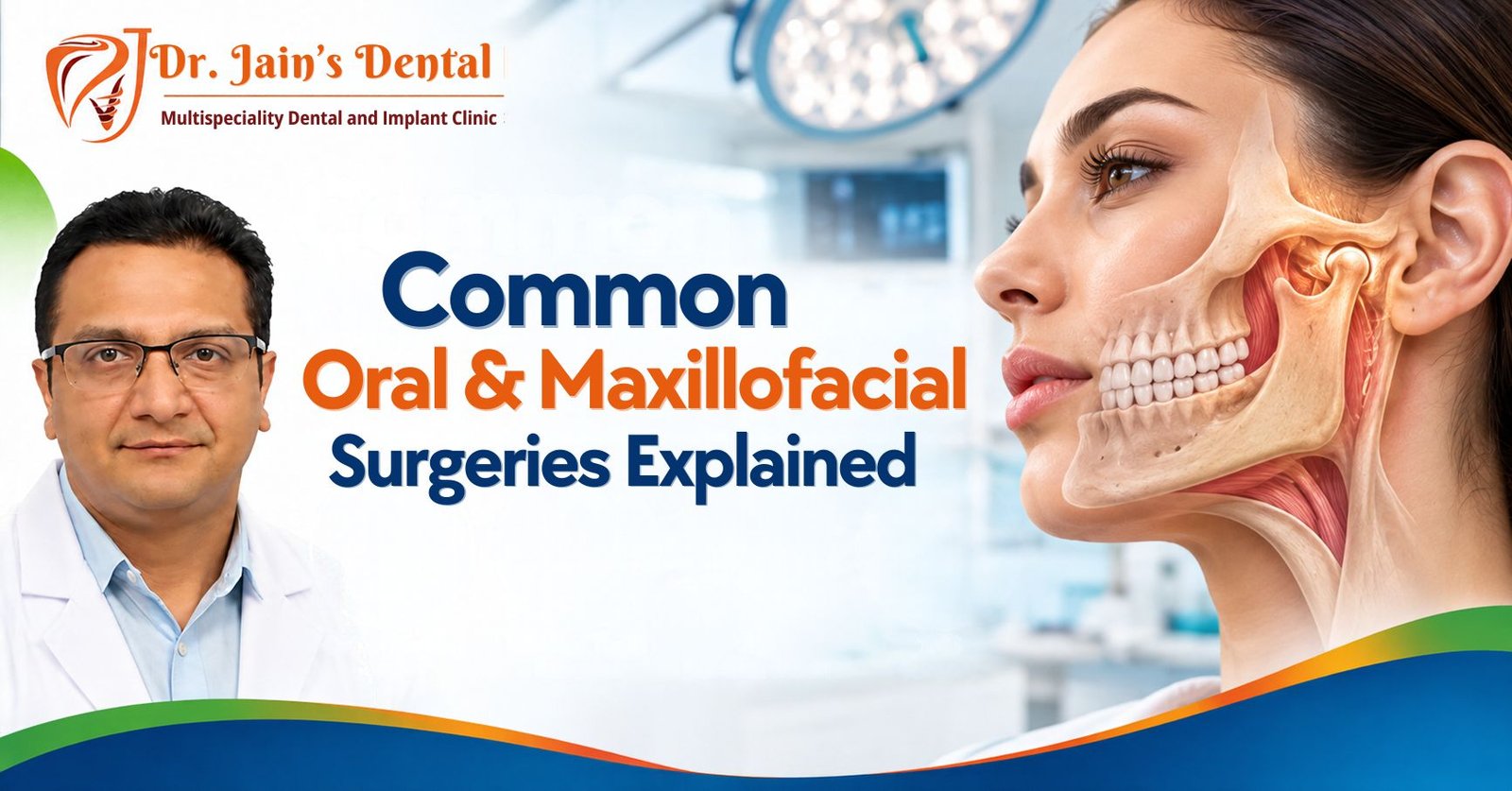
Dental surgery isn't always about fixing a cavity or cleaning your teeth. Sometimes, the problem sits deeper — beneath the gum, inside the jawbone, around an impacted tooth, or even in the structure of the face. That’s where oral and maxillofacial surgery comes in.
It sounds intimidating.
It doesn't have to be.
Oral and maxillofacial surgery covers a wide range of procedures designed to treat conditions involving the mouth, teeth, jaws, and surrounding facial structures. At Dr Jain's Dental & Implant Clinic, these treatments are approached with careful diagnosis, modern imaging, and a treatment plan built around the patient's actual condition rather than a one-size-fits-all solution.
Wisdom Tooth Removal
Wisdom teeth are notorious troublemakers.
Sometimes they grow normally and cause no trouble at all. Other times, they get stuck beneath the gum or push against neighbouring teeth. This is known as an impacted wisdom tooth, and it can lead to swelling, recurring infection, jaw discomfort, or difficulty opening the mouth.
Surgical removal may be recommended when the tooth is deeply impacted or positioned in a way that makes a simple extraction impossible. With proper imaging and planning, the surgeon can determine the tooth's position and decide the safest way to remove it.
Dental Implant Surgery
Losing a tooth changes more than your smile. The underlying jawbone can gradually lose volume because it no longer receives the stimulation that a natural tooth root provides.
Dental implant surgery addresses this by placing an artificial tooth root into the jawbone. Once healing occurs, the implant can support a crown, bridge, or a larger tooth-replacement restoration.
For patients who have lost many or all of their teeth, treatment can become more extensive. Full Mouth Implant Treatment in Noida may involve strategically placed implants that support a complete set of replacement teeth, with the exact approach depending on bone condition, existing teeth, gum health, and overall oral requirements.
That planning matters.
A lot.
Bone Grafting
What happens when there isn't enough bone to support an implant?
Sometimes, the answer is bone grafting.
Bone loss can occur after tooth extraction, long-term tooth loss, gum disease, or certain injuries. A bone graft helps rebuild the deficient area so that it can potentially support future dental treatment. The graft material and technique depend on the location and amount of bone required.
Think of it as rebuilding the foundation before putting something substantial on top.
Jaw Surgery
The jaws influence chewing, speech, facial proportions, and the way the upper and lower teeth meet. When the jaws don't align properly because of a developmental condition, injury, or other structural issue, corrective jaw surgery may be considered.
These procedures can be complex because the surgeon isn't simply moving bone — the treatment has to account for the bite, nerves, facial structure, and function at the same time.
Precision becomes critical.
Cyst and Tumour Removal
Not every lump or unusual area inside the mouth is harmless. Some cysts and tumours can develop around teeth or within the jawbone and may require surgical removal.
The treatment starts with diagnosis. Dental X-rays, CBCT scans, clinical examination, and sometimes laboratory testing help determine what is happening beneath the surface. Once the condition is identified, the surgical approach can be planned accordingly.
Early evaluation can make a significant difference.
Why Proper Diagnosis Matters
Oral and maxillofacial surgery isn't one single procedure. A wisdom tooth extraction is very different from implant surgery, bone reconstruction, or corrective jaw surgery — and each requires its own planning.
At Dr Jain's Dental & Implant Clinic, detailed assessment and appropriate imaging help the dental team understand the problem before recommending treatment. That's important because good surgery begins well before the first incision.
The goal isn't simply to remove something, place something, or repair something.
It's to restore function, protect oral health, and help the patient get back to eating, speaking, smiling, and living comfortably. That’s the real point of oral and maxillofacial surgery.