
A confident smile has the power to transform not only how others see you, but also how you feel about yourself. Modern dentistry has made remarkable advancements in restoring damaged teeth, and among the most reliable solutions available today are zirconia crowns. Known for their strength, durability, and natural appearance, these crowns have quickly become a preferred choice for both dentists and patients.
At Dr Jain’s Dental, the focus is on delivering high-quality zirconia crowns for lasting results, combining advanced technology with personalized care. This article explores everything you need to know about zirconia crowns—what they are, why they are superior, how they are placed, and why they are an excellent long-term investment in your oral health.
Understanding Zirconia Crowns
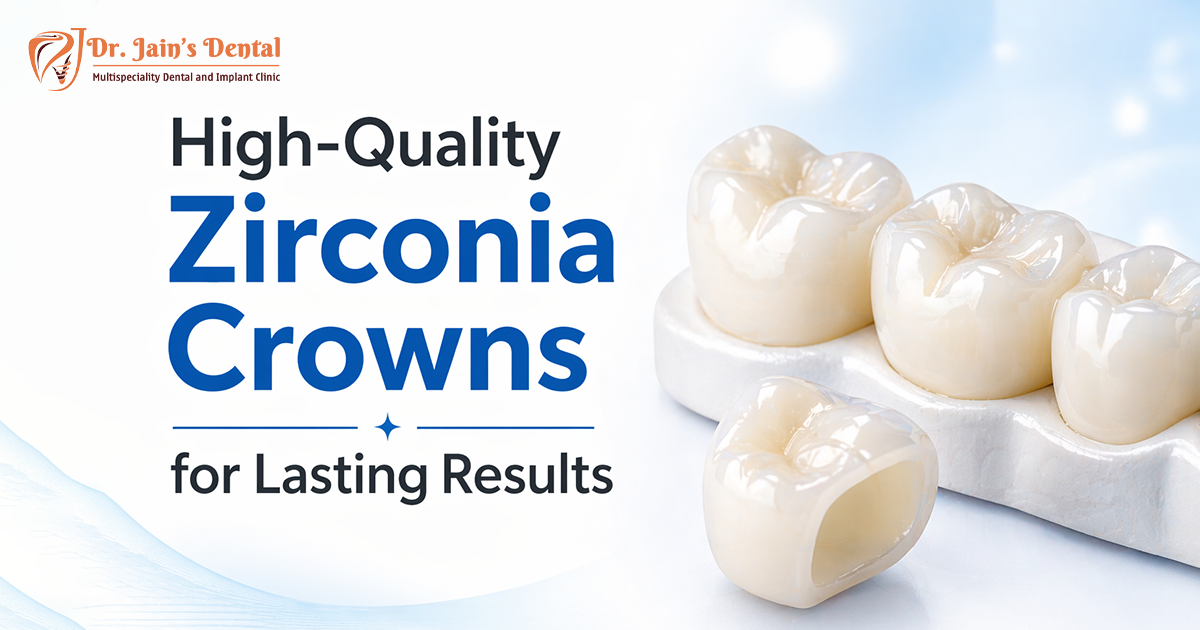
Zirconia crowns are dental restorations made from zirconium dioxide, a highly durable ceramic material. Originally used in medical fields such as orthopedic implants, zirconia has proven to be incredibly strong and biocompatible, making it ideal for dental applications.
Unlike traditional metal crowns or porcelain-fused-to-metal (PFM) crowns, zirconia crowns are metal-free. This not only enhances their aesthetic appeal but also reduces the risk of allergic reactions or gum irritation.
Benefits of Choosing Zirconia Crowns
Zirconia crowns have become one of the most preferred choices in modern dentistry—and for good reason. They combine strength, aesthetics, and long-term reliability, making them an excellent solution for restoring damaged or weakened teeth. Here’s a clear look at the key benefits of choosing zirconia crowns.
1. Strength & Durability
Highly resistant to cracks and fractures
Suitable for both front and back teeth
Withstands strong biting and chewing forces
2. Natural Appearance
Matches the color of natural teeth
Translucent finish for a realistic look
Blends seamlessly with surrounding teeth
3. Biocompatibility
Safe for gums and surrounding tissues
Low risk of allergic reactions
Reduces chances of inflammation
4. Long-Lasting Solution
Can last 10–15 years or more with proper care
Less need for frequent replacements
Cost-effective over time
5. Minimal Tooth Reduction
Requires less removal of natural tooth structure
Helps preserve tooth strength
More conservative treatment option
6. Stain Resistance
Resistant to discoloration from food and drinks
Maintains brightness over time
Ideal for long-term aesthetics
7. No Metal Content
100% metal-free
No dark lines near the gum line
Better choice for people with metal sensitivities
8. Comfortable Fit
Precisely designed using modern technology
Feels natural in the mouth
Causes minimal irritation
9. Versatility
Suitable for crowns, bridges, and implants
Works for both cosmetic and restorative purposes
Adaptable to various dental needs
10. Improved Confidence
Enhances smile appearance
Restores proper tooth function
Boosts overall self-esteem
Types of Zirconia Crowns
Zirconia crowns come in several types, each designed to meet specific dental needs—whether strength, aesthetics, or a balance of both. Understanding these types can help you and your dentist choose the most suitable option for your smile.
1. Monolithic Zirconia Crowns
Monolithic zirconia crowns are made from a single solid block of zirconia.
Key Features:
Extremely strong and durable
Resistant to chipping and cracking
Ideal for back teeth (molars) where chewing pressure is highest
Best For: Patients who need long-lasting restorations in areas that experience heavy biting force.
2. Layered Zirconia Crowns
These crowns have a strong zirconia base with a layer of porcelain added on top for enhanced aesthetics.
Key Features:
More natural, tooth-like appearance
Better translucency compared to monolithic zirconia
Slightly less strong due to the outer porcelain layer
Best For: Front teeth where appearance is more important than maximum strength.
3. High Translucent Zirconia Crowns
This is an advanced form of zirconia designed to look even more like natural teeth.
Key Features:
Improved translucency and aesthetics
Blends seamlessly with surrounding teeth
Slightly less strong than traditional monolithic zirconia
Best For: Visible areas of the mouth where a natural look is essential.
4. Multi-Layered Zirconia Crowns
These crowns are made with multiple layers of zirconia, each with different shades and translucency.
Key Features:
Gradual color transition similar to natural teeth
Combines strength with high aesthetics
More lifelike appearance
Best For: Patients seeking both durability and superior cosmetic results.
5. Zirconia Crowns for Implants
These are specially designed crowns used on top of dental implants.
Key Features:
Strong and biocompatible
Provides a natural look for missing teeth replacements
Long-lasting and stable
Best For: Patients replacing missing teeth with dental implants.
Choosing the Right Type
The best type of zirconia crown depends on several factors:
Location of the tooth (front vs back)
Bite pressure and chewing habits
Cosmetic expectations
Budget considerations
A dentist will evaluate your specific needs and recommend the most suitable option.
Consulting Procedure of High-Quality Zirconia Crowns
Choosing High-Quality Zirconia Crowns for Lasting Results at Dr Jain's Dental begins with a well-structured and thorough consultation process. This initial phase is crucial because it helps the dentist understand your dental condition, expectations, and suitability for zirconia crowns. A proper consultation ensures not only a perfect fit but also long-term success and comfort.
1. Initial Discussion and Patient History
The consultation starts with a detailed conversation between you and the dentist. You’ll be asked about:
Your dental concerns (pain, sensitivity, broken tooth, etc.)
Medical history and any ongoing treatments
Previous dental procedures
Lifestyle habits like teeth grinding or smoking
This step helps identify any underlying issues that may affect the success of zirconia crowns.
2. Comprehensive Oral Examination
The dentist performs a thorough examination of your teeth, gums, and overall oral health. This includes:
Checking for tooth decay or damage
Evaluating gum health
Assessing bite alignment (occlusion)
Identifying signs of wear or fractures
The goal is to determine whether a zirconia crown is the best solution or if other treatments are needed first.
3. Digital Imaging and X-Rays
Advanced diagnostic tools are used to get a clear view of your dental structure.
X-rays help detect internal damage or infections
3D scans or digital impressions provide precise measurements
Intraoral cameras allow you to see the condition of your teeth
These technologies ensure accurate planning for High-Quality Zirconia Crowns for Lasting Results.
4. Treatment Planning
Based on the examination and imaging results, the dentist creates a personalized treatment plan.
This includes:
Deciding the type of zirconia crown (monolithic, layered, etc.)
Planning any preliminary procedures (like root canal treatment)
Estimating the timeline and number of visits
You’ll also be informed about the expected outcome and longevity of the crown.
5. Shade Selection and Aesthetic Planning
For visible teeth, aesthetics play a major role.
The dentist selects a shade that matches your natural teeth
Factors like skin tone, tooth color, and smile line are considered
Digital smile design tools may be used for previewing results
This ensures your crown looks natural and blends seamlessly.
6. Cost Estimation and Discussion
A transparent discussion about costs is an important part of the consultation.
Total treatment cost
Payment options or plans
Value of investing in high-quality materials
Zirconia crowns may have a higher upfront cost, but their durability makes them cost-effective in the long run.
7. Patient Education and Consent
Before proceeding, the dentist explains:
The procedure step-by-step
Benefits and potential risks
Aftercare requirements
You’ll have the opportunity to ask questions and clarify doubts. Once you’re comfortable, your consent is taken to proceed.
8. Pre-Treatment Preparation (If Needed)
In some cases, additional treatments may be required before placing the crown:
Tooth cleaning or scaling
Filling cavities
Root canal treatment (if the tooth is infected)
This ensures a strong and healthy foundation for the zirconia crown.
9. Scheduling the Procedure
After the consultation is complete, appointments are scheduled for:
Tooth preparation
Impression or digital scanning
Crown placement
The timeline is planned to suit your convenience while ensuring optimal results.
Final Thoughts
Zirconia crowns represent a perfect blend of strength, beauty, and reliability. Whether you need to restore a damaged tooth or enhance your smile, they offer a solution that stands the test of time.
Choosing the right dental provider is just as important as choosing the right material. With advanced technology, skilled professionals, and a patient-centered approach, Dr Jain’s Dental ensures exceptional outcomes for every patient.